How to Make Twice-Cooked Pork
Estimated Cooking Difficulty: ★★★★
Essential Ingredients and Tools
- Pork belly
- Green onions
- Ginger
- Green and red bell peppers
- Garlic shoots
- Cooking wine
- Doubanjiang (fermented broad bean paste)
- Light soy sauce
- MSG
Quantities
- Pork belly: 0.5 jin per man / 0.3 jin per woman (Authentic twice-cooked pork uses "Er Dao" meat [commonly known as: rump tip], which has firm meat and a good balance of fat and lean)
- Green onions: 2 stalks
- Ginger: 10-40g
- Green and red bell peppers (choose based on spice preference, 0-30g) *Note: Thick-walled bell peppers are not recommended
- Garlic shoots: 1 bunch
- Cooking wine: 5ml
- Doubanjiang: 10ml
- MSG: 5g
- Light soy sauce: 5ml
Instructions
Step 1: Preparing the Pork Belly
- Heat the pan and press the pork belly firmly against the hot surface with your hand to scorch the skin.
- This step is to remove sweat glands from the pig skin (or ask the butcher to scorch the skin when buying; if you like sweat glands, you can ignore this step).
- Scrub the skin clean with a steel wool pad until all blackened and carbonized parts are completely removed. If not cleaned thoroughly, the dish will taste bitter.
- Place the pork belly in the pot, add enough cold water to submerge it, along with slices of ginger, cooking wine, and green onions (tie 2 stalks of green onions into a knot).
- Bring to a boil over high heat, skim off the foam, and continue boiling for 15 minutes until the lean meat can be easily pierced with chopsticks.
Step 2: Preparing the Side Ingredients
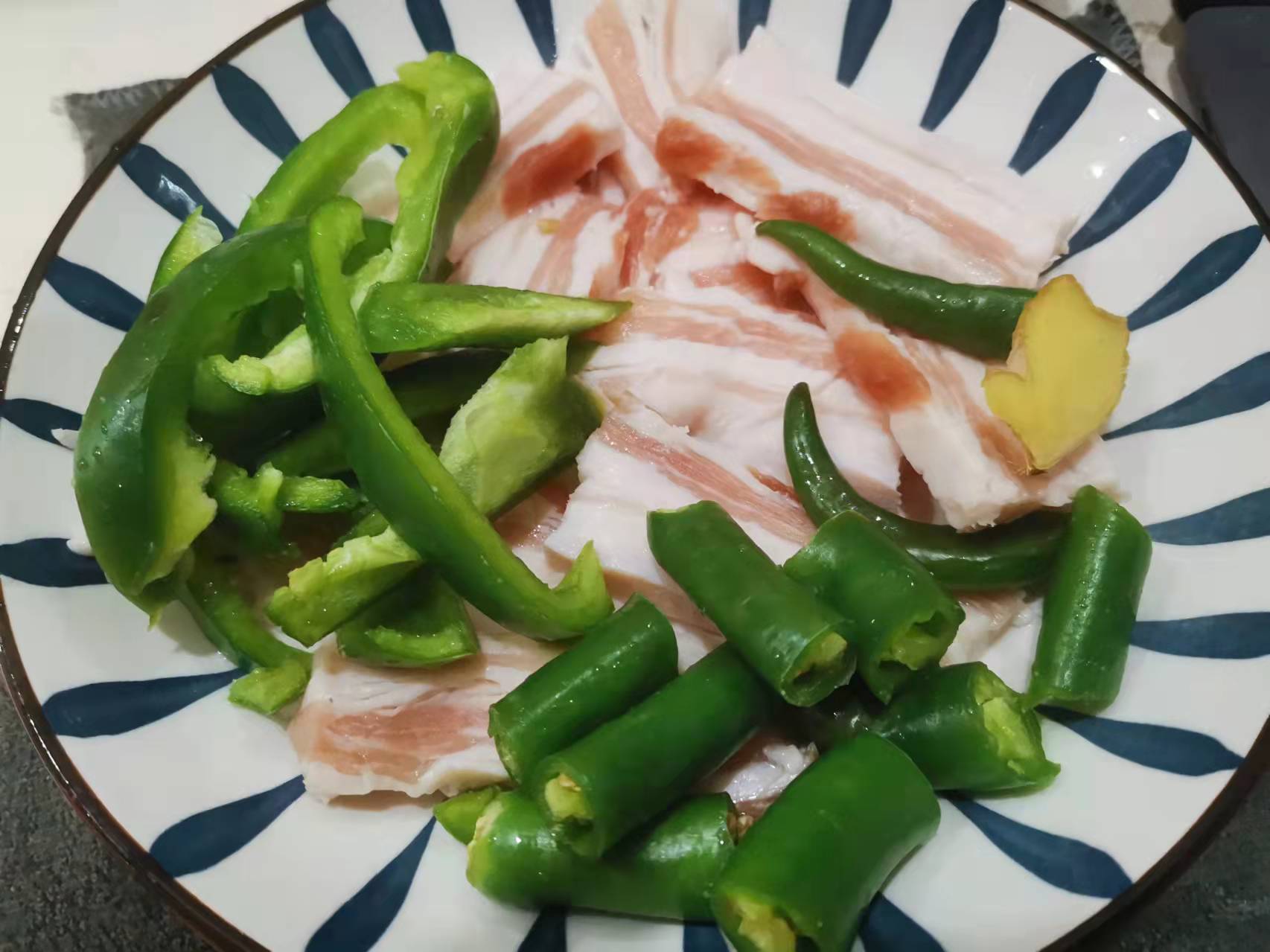
- Slice the green and red bell peppers into rings.
- Cut the garlic shoots into segments.
- Slice the ginger into thin pieces.
- Mix 5ml of Doubanjiang and 5ml of light soy sauce in advance.
Step 3: Second Processing of the Pork Belly
- Remove the boiled pork belly from the pot and place it in cold water to cool down.
- Pat the pork belly dry and slice it into 2mm thick slices with fat on top and lean on the bottom. (Slicing too thick will result in a poor texture and excessive greasiness.)
Step 4: Stir-frying the Meat
Note: This step must be done quickly to avoid burning the pan.
- Heat the pan and add a layer of base oil to coat it.
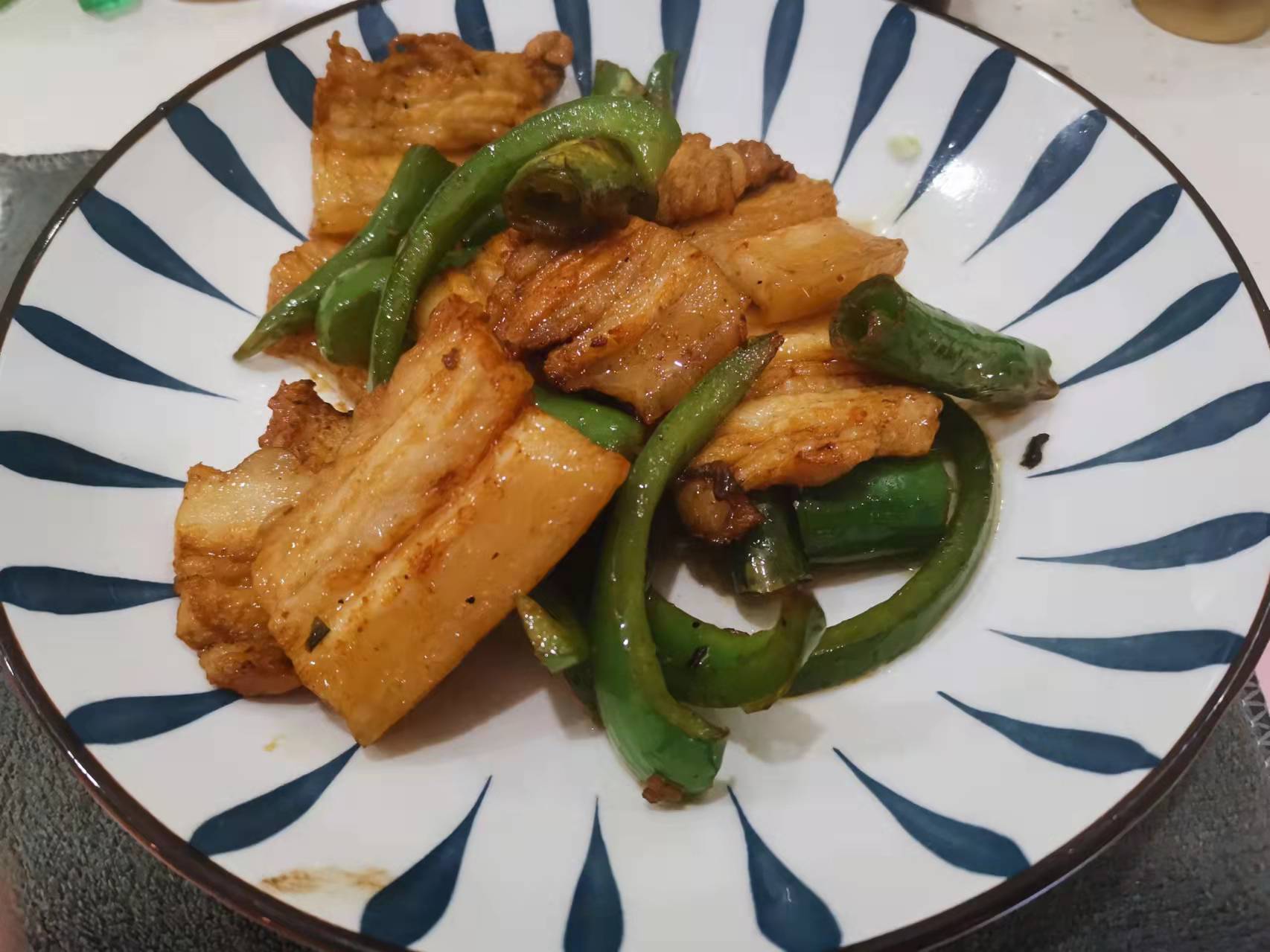
- Add the pork belly and stir-fry until the fat becomes transparent and the meat slices curl slightly (known as forming "lamp bowl" shape). "Er Dao" meat works best.
- Pour in the Doubanjiang and soy sauce mixture, add 5g of MSG, and stir-fry for 15 seconds.
- Add the green and red pepper rings and ginger slices, add another 5ml of Doubanjiang, and stir-fry for 30 seconds.
- Add the garlic shoots and stir-fry for 60 seconds.
- Remove from heat.
Simplified Version
- Take frozen pork belly and let it sit at room temperature for 0.5 hours, or refrigerate fresh pork belly for 1 hour, then slice into 2-5mm thick slices.
- Heat the pan over medium heat, dry-fry the peppers for 30-45 seconds, then remove them.
- Heat the pan again, add a layer of base oil to coat it, and stir-fry ginger slices for 15 seconds.
- Add the pork belly, stir-frying once every 10 seconds. Wait until the pork belly turns slightly browned (the longer you stir-fry, the tougher the texture will be).
- Add the previously dry-fried peppers, 10ml of Doubanjiang, and light soy sauce for seasoning. Continue stir-frying for 60 seconds.
- Add the cut garlic shoots and stir-fry for 10 seconds.
- Remove from heat.
Additional Notes
- If you don't like garlic sprouts, you can substitute them with onions or other vegetables. However, pay attention to the cooking time of the vegetables and stir-fry them in advance to avoid them being undercooked.
- If the Twice-Cooked Pork pieces are large, you can cut them into 5 cm cubes. Boil the pork belly until a chopstick can be inserted into the skin with slight resistance.
- Cooling the Twice-Cooked Pork in cold water will make the meat firmer.
- Drying the Twice-Cooked Pork helps prevent oil splatters during stir-frying.
- Be careful not to cut the Twice-Cooked Pork too thick, as it can become greasy.
- If you follow this guide's preparation process and encounter any issues or have suggestions for improvement, please submit an Issue or Pull Request.
If you follow this guide's preparation process and encounter any issues or have suggestions for improvement, please submit an Issue or Pull Request.