How to Cook Steak
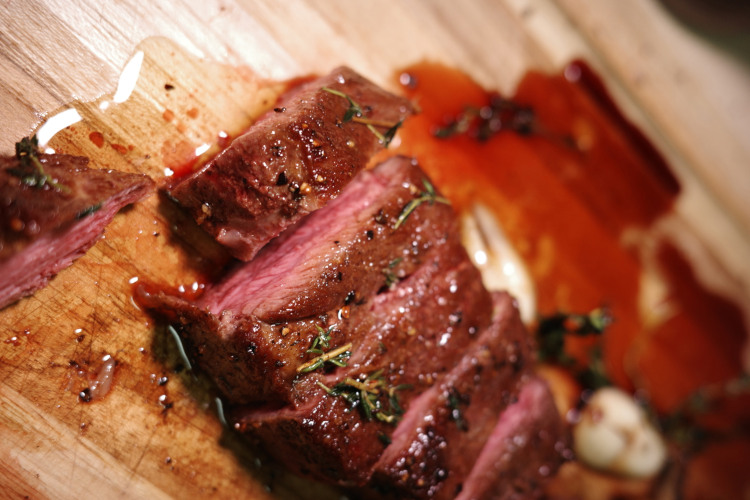
Steak is a popular Western meat dish, rich in protein, fats, and minerals such as iron and zinc. The cooking process involves controlling the doneness of the steak through flexible techniques (such as pan-searing, grilling, sous-vide, and aging), ranging from rare (pink center) to well-done (fully cooked). High-temperature cooking creates a flavorful crust, and when paired with salt, garlic, butter, and spices, it yields rich flavors. While the basics of cooking steak are simple, mastering it is difficult. This article primarily introduces the simplest method: pan-searing steak, with a total cooking time of 15-30 minutes. The image shows a medium-rare short rib.
Estimated Cooking Difficulty: ★★★★
Essential Ingredients and Tools
- Frying pan (cast iron frying pan recommended if available)
- Aluminum foil (optional)
- Paper towels (optional)
- Tablespoon
- Steak, see How to Choose Different Types of Steak
- Olive oil (extra virgin olive oil recommended)
- Butter
- Salt (large-grain sea salt recommended)
- Black pepper powder (coarse-grain freshly ground black pepper recommended)
- Garlic
- Herbs (optional; rosemary or thyme are recommended; use fresh plant sprigs rather than powdered spices if possible)
- Pre-made steak sauce (optional)
- Side dishes (optional, prepare according to preference; asparagus, button mushrooms, cherry tomatoes, and small potatoes are recommended; choose 1-2 types)
Calculations
Before each preparation, determine how many servings you plan to make. One serving is sufficient for 2 people.
Per serving:
- Steak 450-500g (two steaks)
- Black pepper powder 2g
- Salt 5g
- Garlic 1 clove (approx. 25-30g, actual usage approx. 5-10g)
- Olive oil 10-15ml
- Butter 20-25g
- Button mushrooms 5-10 pieces
- Small potatoes 5-10 pieces (approx. 20g each)
- Cherry tomatoes 5-10 pieces (approx. 15g each)
- Thyme 2g (if using fresh thyme sprigs, take 3-6 sprigs, each approx. 10cm long)
Instructions
Preparation
-
Remove the steak from the refrigerator to thaw.
-
If the steak is frozen, transfer it to the refrigerator the night before and let it sit at room temperature for half an hour before cooking.
-
Do NOT thaw the steak in water or by heating.
-
Wash the cherry tomatoes, small potatoes, and button mushrooms, cut them in half, and set aside.
- Peel the garlic, keep 5-8 larger cloves, and flatten them with the back of a knife.
-
Pre-treatment of the steak
-
For ribeye steaks (see How to Choose Different Types of Steak), use kitchen shears to vertically insert into the connective tissue at the center of the ribeye steak and cut 1-2 times. This is because the "eye" of the ribeye (this connective tissue) contracts severely at high temperatures, causing the steak to deform and preventing even heat distribution.
- For sirloin steaks, if you dislike the fat along the edge, you can slowly trim it off with a knife.
- Next, wrap the steak in kitchen paper towels to absorb all surface moisture until no visible water stains remain when you lift the steak from the cutting board.
Cooking
Note: This process is suitable for steaks 2-3cm thick, cooked to medium-rare (5-7). If you prefer a different doneness, consider increasing or decreasing the initial searing time by 20-30%.
- Turn the stove to high heat (see Appendix for guidance on heat levels), add olive oil to the pan, and heat the pan for 15-30 seconds.
- Season the steak. Sprinkle sea salt and black pepper evenly over the entire surface of the steak, then rub and massage them in with your hands to ensure the salt and pepper granules penetrate the meat. Note that the steak must be placed in the pan immediately after seasoning; pre-seasoning is not recommended. This is because the salt on the surface draws out moisture from the beef, which affects cooking and diminishes flavor.
- Heat the pan until the oil reaches 60-80% heat (see Tips for Judging Oil Temperature), then slowly place the steak into the pan, moving from the near side to the far side.
- If using potatoes as a side dish, place them in a bowl and heat in the microwave for 10 minutes, or boil in boiling water for 3-5 minutes.
- Sear one side for 1.5 minutes (this time is suitable for steaks approximately 2-3cm thick. If your steak is thinner, consider reducing this time to 1 minute. If thicker, consider increasing it to 2-2.5 minutes.)
- Flip the steak and sear the other side for another 1.5 minutes.
-
For sirloin and filet mignon steaks, you need to use chopsticks or a spatula to stand the steak on its side and sear the edge for about 30 seconds.
-
Turn the stove down to medium heat, then quickly add butter, garlic, and thyme in order. Use a spatula to push the butter around the pan until it melts completely. Press the garlic under the steak to enhance the flavor.
- Tilt the frying pan on the stove so that all the oil flows to one side.
-
Place the herbs and garlic on top of the steak. Use a spoon to scoop up the oil from the pan and continuously baste the steak. Continue this process for 30 seconds, then flip the steak and repeat the basting process for another 30 seconds.
-
You can judge the current doneness by observing the state of the basting oil on the steak. If the oil bubbles when poured over the steak and its color does not turn dark brown, the oil temperature is appropriate.
- If your steak was not patted dry, thawed using non-recommended methods, or pre-salted, excessive water will accumulate in the pan, causing the steak to boil instead of sear, thereby losing its flavor.
-
If there are excessive oil bubbles on the steak surface and the oil turns dark brown, the oil temperature is too high. You should remove the pan from the heat source, wait a moment, and then resume basting.
-
Remove the steak and place it on a cutting board. Wrap it in aluminum foil and let it rest for 5-10 minutes. This process (known as resting) uses the steak's residual heat to continue cooking and lock in moisture.
- Add the side dishes (potatoes, tomatoes, mushrooms) to the pan and sauté over medium heat for 5 minutes.
- Remove the steak and slice it into strips approximately 1.5 cm wide. At this point, you can observe the doneness of the beef.
- Remove the side dishes, plate them, and drizzle with the remaining oil from the pan or steak sauce (optional).
Additional Content
Controlling Heat
Searing a steak is an art of controlling heat. Due to space limitations, here we briefly provide some quantitative methods for evaluating heat levels and the terminology related to heat used in this guide. For more details, see Tips for Judging Oil Temperature.
- For induction cooktops:
- High heat: Power 1.8 kW - 2.2 kW.
- Medium heat: Power 800 W - 1.4 kW.
- Low heat: Power 200 W - 600 W.
- For gas stoves:
- High heat: Rotate the gas valve to 70%-90% of the maximum gas flow rate.
- Medium heat: Rotate the gas valve to 40%-60% of the maximum gas flow rate.
- Low heat: Rotate the gas valve to 10%-30% of the maximum gas flow rate.
Regarding Seasoning
Seasoning a steak does not necessarily have to follow the specifications of this guide. Generally, garlic, black pepper, and butter are essential. However, if you do not enjoy the flavors of Lamiaceae plants such as rosemary or thyme, you are free to try other steak seasonings. There are also various barbecue seasoning salts available on the market. The author once discovered a fusion of Chinese and Western techniques: slicing small chili peppers and adding them with garlic slices to olive oil for frying, then drizzling this mixture over the steak as seasoning at the end, which offers a unique flavor.
If you encounter any issues or have suggestions for improvement while following the preparation process in this guide, please submit an Issue or Pull request.