How to Make Pizza Dough
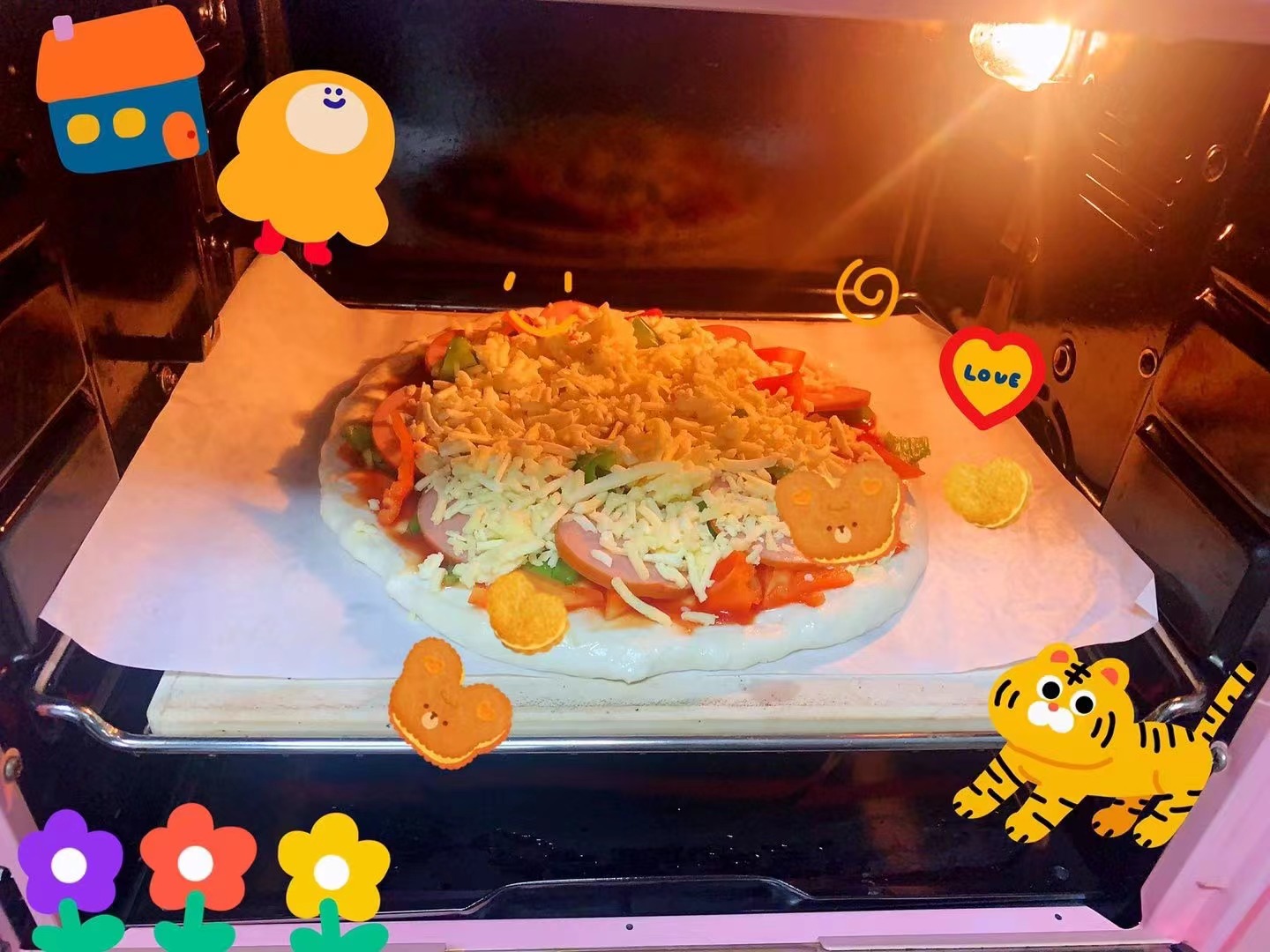
Making pizza is generally quite simple. The most debated and slightly tricky part is the pizza dough. Once you have the dough ready, you can simply add your favorite toppings and bake it. Therefore, this guide focuses on how to make pizza dough.
The dough in this tutorial is a soft dough made with a cold, overnight fermentation process.
Estimated Cooking Difficulty: ★★★★
Essential Ingredients and Tools
Ingredients
- All-purpose flour
- Water (warm)
- Angel brand dry yeast
- Table salt
- Olive oil
- White sugar
Tools
- Oven
- Baking parchment paper
- Pizza stone (optional; a regular baking tray works too)
- Rolling pin (optional)
Calculations
An 8 to 9-inch pizza requires approximately 125g of flour, which is roughly enough for one person (an adult male might find it just sufficient).
Ratio of Ingredients Mixing
面粉 : 水 : 橄榄油 : 酵母粉 : 盐  : 糖
100 : 70 : 7     : 1     : 0.6 : 0.6
Example
To make 4 pizza crusts at once, you need:
- Flour 125g x 4 = 500g,
- Water 70 x 5 = 350g,
- Olive oil 7 x 5 = 35g,
- Yeast 1 x 5 = 5g,
- Salt 0.6 x 5 = 3g,
- Sugar 0.6 x 5 = 3g
Instructions
- Dissolve the yeast in warm water and stir slightly. Set aside.
- Take the prepared flour and sequentially add salt, olive oil, and granulated sugar.
- Combine the water and flour mixture. Add the water gradually while stirring until all the water is incorporated.
- Stir until no dry flour is visible.
- Place the dough in a container approximately three times its volume, seal it, and refrigerate (4°C). Wait 8–12 hours. It is usually best to prepare it in the evening for use the next day.
- Check if the dough has risen sufficiently. It is considered ready when it has roughly doubled in size.
- Take the risen dough and divide it evenly into four portions. Cover each with plastic wrap and set aside.
- Dust a work surface with a generous amount of dry flour and begin kneading.
- Since the dough is quite wet, dusting it with dry flour will prevent it from sticking to your hands. You don't need to knead it too much; just until the surface becomes slightly smooth.
- Stretch the dough by hand or roll it out with a rolling pin. It doesn't have to be perfectly round, as long as the thickness is even and it fits in your oven.
- Line a baking sheet with parchment paper, place the crust on top, add your preferred ingredients, and sprinkle with shredded cheese.
- For fruit pizzas: Bake at 180°C on the top rack and 220°C on the bottom rack for 16 minutes.
- For meat and vegetable pizzas: Bake at 200°C on the top rack and 230°C on the bottom rack for 18 minutes.
- Drizzle with salad dressing or your favorite sauce and enjoy!
Additional Notes
- Pay close attention to the water ratio.
- Oven quality varies. Observe the first batch carefully to understand how your oven's heat affects the pizza.
- Unless specified as low-gluten or high-gluten flour, medium-gluten flour is typically used.
- Fruits that release a lot of water, such as watermelon and oranges, should not be used as toppings.
If you encounter any issues or have suggestions for improvement while following this guide, please submit an Issue or Pull request.